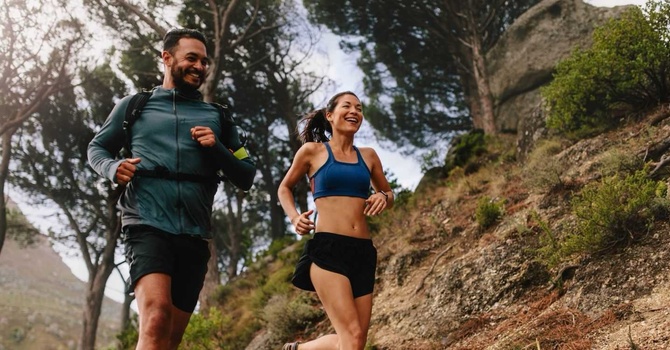
For many residents in the East Bay, knee pain is the "check engine light" that interferes with an active lifestyle. Whether you are feeling a sharp pinch while lunging during a workout at the Training Station, or a dull ache as you descend the trails at Anthony Chabot Regional Park, these symptoms are often more about load management and resilience than actual joint damage.
As a Board-Certified Orthopaedic Specialist (OCS), I see these patterns frequently. The good news? Your knees may feel "bad" or "worn out", but they may just currently be under-prepared for the demands you're placing on them.
Reconciling Mechanics with Resilience
In modern rehabilitation, we move beyond the idea that the body is a machine with "misaligned" parts. We utilize the framework of "Reconciling Biomechanics with Pain Science" (Lehman, 2017). This approach acknowledges that while biomechanics (how you move) matter, they aren't the only factor in pain.
Knee pain during a lunge isn't always a sign of "damage"; often, it’s your nervous system being overprotective. By using the equipment at the Training Station, we find your "entry point"—a version of a squat or lunge that is tolerable—and gradually "poke the bear" to build confidence. As Lehman argues, we don't need "perfect" movement to be pain-free; we need movement that is varied, strong, and adaptable to the hills of Oakland or the streets of San Leandro.
The "Envelope of Function"
To fix knee pain, we must rebuild the capacity of the tissues to handle stress. This is what Dr. Scott Dye refers to as the "Envelope of Function" (Dye, 2005). When you hike down toward the San Leandro Marina, the force on your knee increases significantly. If that force exceeds your current envelope, the joint becomes sensitized. Our goal at Oso Physical Therapy is to expand that envelope through progressive loading.
Key Benchmarks for Recovery
To ensure your "engine" can support your joints, we look for objective milestones:
-
Quadriceps Symmetry: We aim for a Limb Symmetry Index (LSI) of 90% or greater. If one leg is significantly weaker, the other must compensate, often leading to a "loud" knee.
-
The "Second Heart": We test the calves with Single Leg Calf Raises. You should be able to perform 20–30 full-range repetitions. Strong calves take the "braking" pressure off the knee during downhill walks in Alameda’s Gold Coast.
-
The "Quiet Knee": We use a pain-monitoring model (Silbernagel et al., 2007). It is often acceptable to have mild discomfort (a 2 or 3 out of 10) during exercise, provided the knee is "quiet" (no swelling or increased stiffness) the next morning.
The Roadmap: From Isometrics to Impact
We don't just jump back into heavy lunges. We follow a physiological progression:
-
Intentional Loading: Holding a squat, or lunge, at a specific angle or with modified weight to desensitize the joint and improve tolerance can diminish pain and build initial tendon capacity.
-
Varied Speeds: Focusing on slow lowering phases or quick concentrics of movements to strengthen the muscle-tendon unit with varied rates
-
Plyometric Drills: Working on two-footed hopping and skipping to improve the knee's ability to handle the "spring-like" forces required for running or steep hiking in the hills
Why the Training Station Environment Matters
Successfully rehabilitating knee pain requires the right tools. Utilizing the professional-grade equipment at the Training Station allows us to apply specific, measurable loads—from heavy leg presses to stable squat racks—that are essential for re-training your nervous system.
The open turf provides the perfect space for us to analyze your mechanics during skipping and hopping drills, ensuring you feel robust and capable before you head back to the Oakland Hills.
Get Back to the Activities You Love
Don't let knee pain dictate your lifestyle. At Oso Physical Therapy, we use objective testing and evidence-based loading strategies to get you back to squatting, lunging, and hiking without a second thought.
References:
-
Lehman, G. J. (2017). "Reconciling Biomechanics with Pain Science."
-
Dye, S. F. (2005). "The pathophysiology of patellofemoral pain: a tissue homeostasis perspective." Clinical Orthopaedics and Related Research.
-
Silbernagel, K. G., et al. (2007). "Continued sports activity with a pain-monitoring model during rehabilitation." American Journal of Sports Medicine.
-
Powers, C. M. (2010). "The Influence of Abnormal Hip Mechanics on Knee Injury." JOSPT.

Ben Fedewa
Contact Me